Vocabulary Building for Kids: Fun Ways to Learn New Words
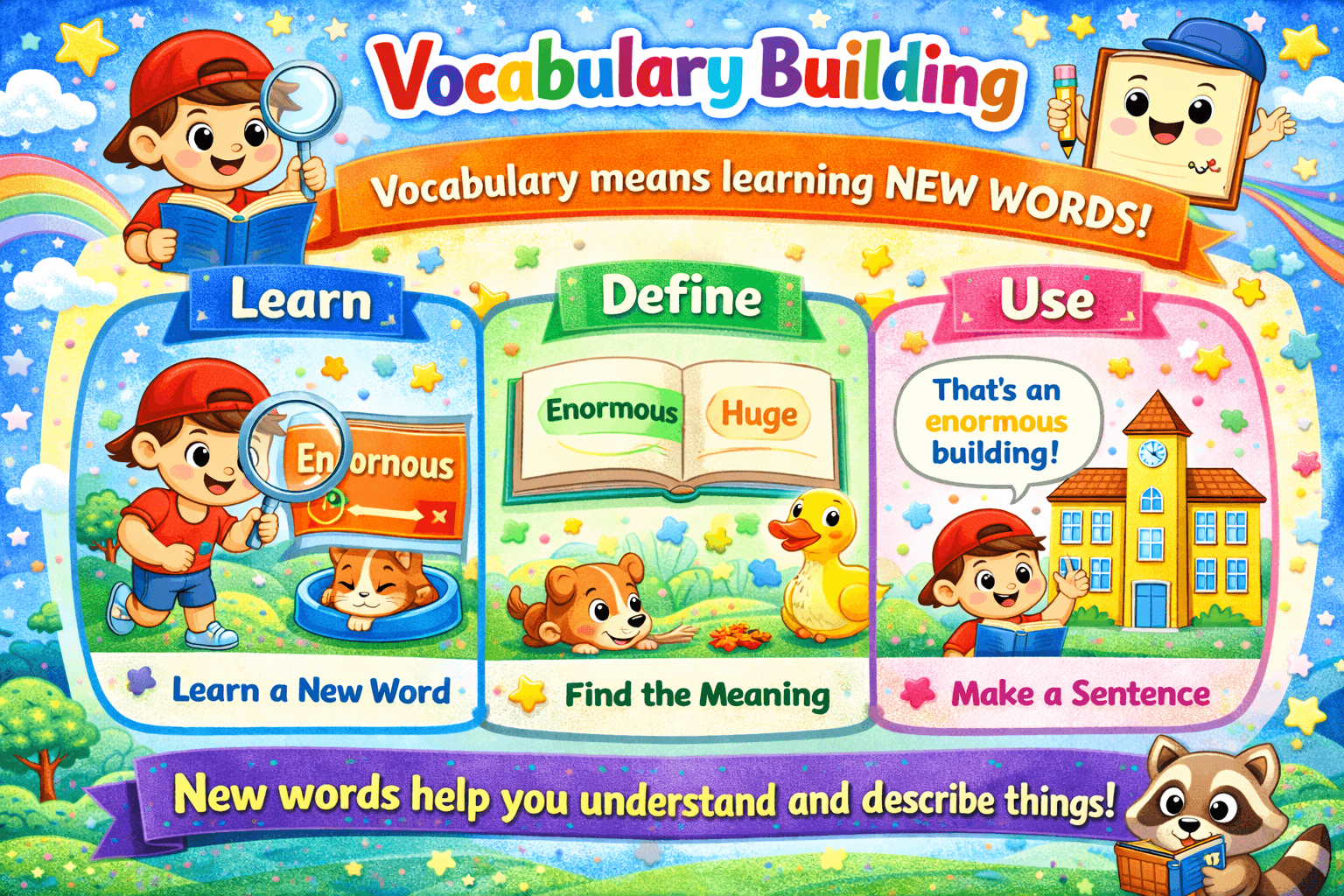
📖✨Vocabulary building is an important part of learning language. Vocabulary means the words we know and use when we speak, read, and write. When children learn new words, they can express their ideas better and understand stories, lessons, and conversations more easily. Learning vocabulary does not have to be boring. With games, stories, and fun activities, children can enjoy discovering new words every day.
Loading cards...
Why Vocabulary is Important
A strong vocabulary helps children:
Understand what they read and hear
Express thoughts and feelings clearly
Improve reading and writing skills
Communicate confidently with others
Research shows that activities like reading aloud, storytelling, and word games help children remember and use new vocabulary more effectively.
Fun Ways to Build Vocabulary
1. Word of the Day
Introduce one new word each day. Write it on the board and practice using it in sentences.
Example
Word: Gigantic
Sentence:
"The elephant is gigantic!"
Explanation:
Gigantic means very big or huge.
Activity:
Ask the child to say another sentence using the word.
2. Read and Discover New Words
Reading stories helps children learn words naturally because they see them used in sentences and situations.
Example Story:
"Ben found a shiny shell on the beach. He was excited to show it to his friends."
New Word: Shiny
Explanation:
Shiny means something that reflects light or sparkles.
Interactive Question:
Can you name something shiny in your house?
Reading stories helps children understand vocabulary through context and repetition.
3. Synonym Game
A synonym is a word that has the same or similar meaning.
Example:
Word: Happy
Synonyms:
Joyful
Glad
Cheerful
Explanation:
All these words describe someone who feels good or pleased.
Activity:
Ask the child:
"What other words can mean happy?"
Learning synonyms helps children expand their vocabulary and understand different ways to describe the same idea.
4. Picture and Word Match
Show pictures and ask children to match them with the correct word.
Example:
Picture: 🐶
Word: Dog
Explanation:
A dog is an animal that many people keep as a pet.
Interactive Activity:
Ask the child to describe the dog using three words.
5. Vocabulary Story Challenge
Give children 3 words and ask them to create a short story.
Example Words:
Forest
Brave
Adventure
Example Story:
"A brave boy went into the forest for an adventure."
Explanation:
Stories help children practice using new vocabulary in meaningful sentences.
Writing and storytelling activities improve vocabulary retention and language development.
Quick Vocabulary Activity
Guess the meaning of the word:
Word: Tiny
Sentence:
"The tiny kitten slept in a small box."
Question:
What does tiny mean?
A. Very big
B. Very small
C. Very fast
Correct Answer:
B. Very small
References
- Chrysalis Kids. (2025). Vocabulary Building: How to Improve English Vocabulary in Kids. https://www.chrysaliskids.com/blog/vocabulary-building-how-to-improve-english-vocabulary-in-kids/
- English Bright ESL. (2025). Creative Ways to Build English Vocabulary for Kids. https://englishbrightesl.com/english-vocabulary-for-kids/
- SchoolTube. (2024). Vocabulary Building for Kids: Easy Tips and Tricks. https://www.schooltube.com/vocabulary-building-for-kids-easy-tips-and-tricks/
- BetterGradez. (2024). Strategies for Retaining New Words. https://www.bettergradez.com/insights/strategies-for-retaining-new-words-building-a-lifelong-vocabulary